August 12, 2026
Key Takeaways
- In Fenton, MI, glacial clay soils can increase tree uprooting risk because they retain water during spring rains and snowmelt, which reduces soil grip and keeps roots anchored during high winds.
- Saturated soil plus strong winds transfer canopy loads to a weakened root plate, often causing whole-tree windthrow.
- Species with shallow roots (silver maple, Bradford pear, poplar) are most vulnerable in clay soils.
- Early inspections, structural pruning, and addressing drainage/compaction can markedly reduce failure risk.
- Holtslander & Sons offers local assessments, 24/7 emergency response, and specialized removal techniques for saturated-clay conditions.
Every spring in Fenton, MI, property owners face a recurring and often surprising problem: trees that looked healthy through winter suddenly fail during the season’s first big storms. The culprit in many of these cases isn’t disease or age alone; it’s the soil. Much of Southeast Michigan sits on compacted, glacially derived clay that behaves very differently under water than loam or sand. When that clay becomes saturated in spring from snowmelt and heavy rains, its ability to hold roots in place drops sharply. Combine that with the wind energy of a thunderstorm, and even mature trees with large root systems can uproot. This article explains why clay soils amplify uprooting risk, which species and tree conditions are most susceptible, warning signs homeowners should watch for, and practical measures to reduce the chance that your tree becomes a liability on a windy spring night.
Why Clay Soils Matter More Than You Think
Not all soils are created equal when it comes to tree anchorage. Clay has very small particle sizes and a tendency to compact into dense plates. That gives clay high water-holding capacity and when those pores fill with water, the soil loses much of its cohesion and internal friction. The result is effectively a slick layer around roots. When the ground is dry, roots can gain purchase by penetrating and binding soil; when clay is saturated, that grip is reduced and the whole root plate can slide or rotate under lateral wind loads.
Fenton’s local climate amplifies this problem. Winters bring snow accumulation; spring brings rapid melting combined with seasonal heavy rains. Those rapid wetting events saturate the upper root zone over a short period, often right before strong spring storms arrive. This quick switch from firm to waterlogged ground is exactly when trees become most vulnerable to windthrow.
How Spring Storm Dynamics Interact With Saturated Clay
When wind pushes against a tree’s canopy, the force is transferred down the trunk to the root plate.
- In well-drained soils, roots and surrounding soil provide resistance by friction and by the mechanical interlock of root systems.
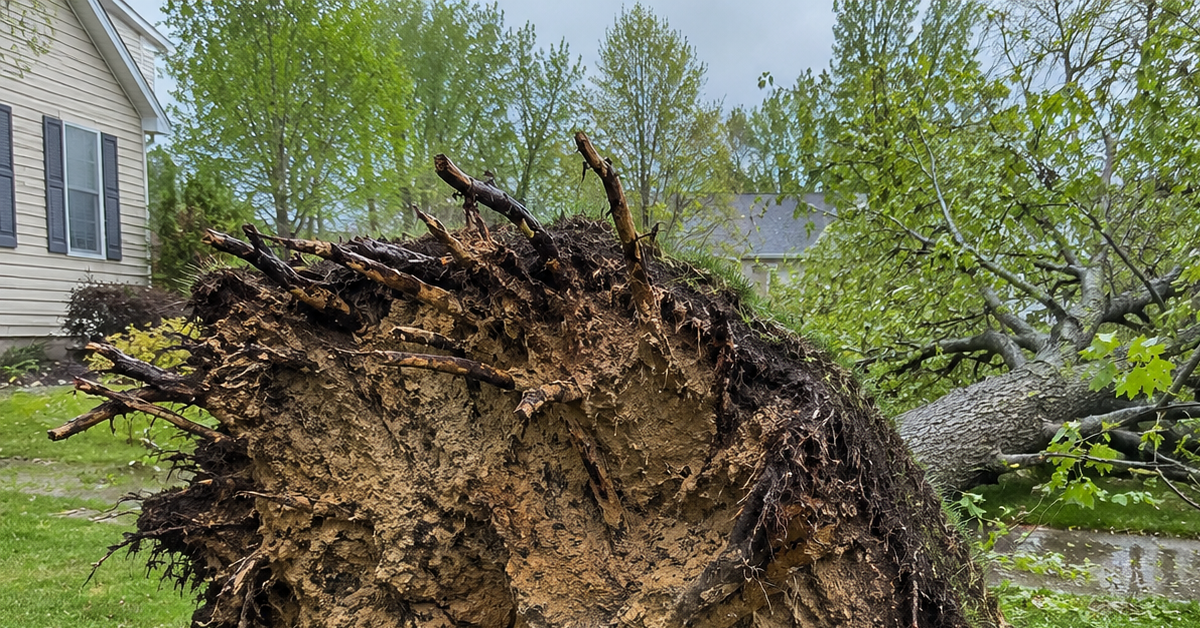
- In saturated clay, that friction is greatly reduced. The root plate may hinge or slide, and the entire tree can uproot leaving a circular “root plate” or disk of soil attached to the roots. This phenomenon is more common on heavy wet soils following long periods of rain or snowmelt.
- Additionally, freeze–thaw cycles common in late winter and early spring can loosen soil structure and damage fine roots. Repeated cycles cause soil heave and small fractures that undermine root anchorage even before saturation occurs.
Species and Situations That Increase Uprooting Risk
Some tree species and site conditions make uprooting more likely:
- Shallow-rooted species: Silver maple, Bradford pear, poplar, cottonwood, and some planted ornamentals often develop plate-like root systems that sit near the surface exactly where saturated clay causes the most trouble.
- Trees on raised or compacted areas: Compaction restricts root depth; trees compensating by growing shallow roots are more vulnerable.
- Trees with heavy, one-sided canopies: Asymmetric crowns increase leverage on the root plate during wind events.
- Trees near water or poorly drained depressions: These locations saturate earliest and stay wet the longest.
- Trees with previous root damage: Construction, trenching, or soil grade changes near a tree can kill anchoring roots and increase risk.
Warning Signs Homeowners Should Not Ignore
Early detection is essential. On heavy clay sites, look for:
- Soil heaving or small mounds around the base following freeze–thaw or wet events.
- Cracked or shifted soil disks at the root collar
- Recent increases in trunk lean, especially after wet seasons
- Exposed surface roots that look pulled or distorted
- Declining crown vigor or sudden dieback without canopy pests evident
- Fungal fruiting bodies or conks around the base, indicating root decay that weakens anchorage.
Even one of these signs merits a closer look from a certified arborist on clay soils, problems tend to progress faster.
Practical Steps to Reduce Uprooting Risk
You can’t change the glacial clay beneath your yard, but you can change how trees interact with it:
- Schedule proactive assessments in late winter or early spring before full saturation. A certified arborist can identify subtle root-zone problems.
- Improve drainage where practical: correct surface grading, install shallow curtain drains to move excess surface water away from critical root zones, or regrade to avoid ponding.
- Avoid soil compaction: keep heavy machinery away from root zones during construction, and avoid heavy parking on lawns near important trees.
- Mulch correctly: a 2–4 inch organic mulch ring (kept away from the trunk flare) moderates moisture swings and protects surface roots without burying the root collar.
- Use structural pruning to reduce canopy sails: Lowering end-weight and removing co-dominant stems reduces the wind load on a compromised root plate.
- Consider root excavation or root collar inspection if major construction occurred near the tree; repairing severed roots or improving oxygen availability can help.
- Remove trees that show extensive decay or root failure, proactive removal is safer and often less expensive than emergency action after a failure.
Timing: When to Act
Spring is the most critical window in Fenton because rapid thaw and heavy seasonal rains saturate clay quickly. Homeowners should schedule inspections in late winter or very early spring, before the peak storm period. Post-storm inspections are also essential; just because a tree survives one event doesn’t mean it isn’t compromised.
Why Local Expertise Matters in Fenton
For homeowners in Fenton and Southeast Michigan, Holtslander & Sons Tree Service brings local soil, climate, and species knowledge together with the equipment and experience needed to manage trees on saturated clay. We understand how Fenton’s heavy clay conditions, seasonal rainfall, and local tree species interact to increase windthrow risk. Our licensed arborists evaluate trees for signs of root plate movement, soil heaving, decay, and structural weaknesses before recommending the right solution.
Frequently Asked Questions About Clay Soils and Uprooting
How soon after heavy rain does the risk increase in Fenton, Michigan?
Risk increases as soon as the upper root zone becomes saturated, a period that can last from days to weeks depending on drainage and temperature. After rapid snowmelt and prolonged rain events, expect elevated risk within 24–72 hours.
Can structural pruning prevent uprooting completely?
No pruning can make a tree storm-proof, but structural pruning reduces wind resistance and can significantly lower the probability of failure, especially when combined with root-zone improvements.
Which trees should be removed proactively on clay soils?
Trees with large root-plate heave, extensive root decay, severe trunk splits, or advanced lean toward structures usually merit removal. A certified arborist will offer a risk-based recommendation.
Can healthy-looking trees still uproot in Fenton’s clay soils during spring storms?
Yes. A tree can appear healthy above ground while still having weakened root anchorage below the surface. In Fenton, saturated glacial clay can reduce soil stability around the roots, and strong spring winds can cause the root plate to shift or fail before visible signs of decline appear. Regular tree inspections can identify hidden risks before storms occur.
Does improving drainage help reduce tree uprooting risk in clay soil?
Yes. Improving drainage can reduce the amount of time clay soils remain saturated and help maintain stronger root anchorage. Correcting water pooling, improving grading, reducing soil compaction, and directing excess water away from critical root zones can lower the stress placed on trees during spring storms.
Why are newly planted or recently disturbed trees more vulnerable in Fenton clay soils?
Newly planted trees and trees affected by construction may have weaker root systems because their roots have not fully established or may have been damaged. In compacted or saturated clay, limited root growth and reduced soil stability can make these trees more likely to lean, shift, or uproot during high winds.
How can homeowners tell if a tree’s roots are becoming unstable after a spring storm?
Homeowners should look for warning signs such as soil lifting around the trunk, cracks in the ground near the root zone, exposed or pulled roots, sudden leaning, or a tree that moves excessively in the wind. These signs may indicate root plate instability and should be evaluated by a certified arborist before the next storm.
Summary Checklist: Clay Soil Uprooting Risk Fenton, MI
| Task | Priority | Recommended Action |
| Inspect Trees Before Spring Storms | High | Schedule an arborist assessment in late winter or early spring. |
| Look for Soil Heave or Cracked Root Plates | Critical | Flag trees for immediate professional evaluation. |
| Improve Drainage and Avoid Compaction | High | Regrade, install surface drains, and restrict heavy equipment near roots. |
| Structural Pruning to Reduce Sail | High | Target long, heavy limbs and co-dominant stems. |
| Document Trees for Insurance | Moderate | Take dated photos of high-value and high-risk trees. |
| Keep Emergency Tree Service on Call | High | Save a contact for rapid storm response. |
Final Advice
Fenton’s beautiful mature trees are a defining feature of many properties but the underlying glacial clay that helped shape the landscape also increases uprooting risk in spring storms. Proactive inspection, targeted pruning, drainage improvements, and working with an experienced local tree service firm in Fenton,Michigan can change a tree from liability to a resilient asset. Don’t wait for the first thunderstorm to discover a hidden structural fault; take action now and protect your home, family, and landscape.