
October 1, 2026
Preparing your Genesee County trees for winter starts with a fall inspection, appropriate pruning, thorough watering when conditions are dry, and proper care around the root zone. These steps can help trees enter winter in better condition, although no preparation method can prevent every instance of snow, ice, wind, or cold damage.
Holtslander & Sons Tree Service helps property owners identify weak branches, structural concerns, and damaged trees before winter weather arrives. If you are unsure whether a tree needs pruning, removal, or continued observation, call (248) 290-9906 or contact our team for an assessment and free estimate.
Our winter preparation work focuses on the condition of the tree and the property around it. We look at branches near roofs and driveways, visible trunk defects, root-area changes, and other concerns that may become harder to address once the ground is frozen or heavy snow arrives.
What Should You Do Before Winter?
Property owners should inspect their trees, remove obvious hazards through professional pruning, water during a dry fall, protect young trees, and keep mulch and deicing salt away from trunks. Completing these tasks before freezing conditions can make tree care more manageable.
Use this fall checklist as a starting point:
- Look for dead, cracked, or hanging branches
- Check trunks for splits, cavities, or fresh damage
- Watch for new leaning or changes around the roots
- Schedule appropriate pruning before severe weather
- Water trees if fall conditions have been dry
- Apply mulch correctly around the root zone
- Protect vulnerable young trunks
- Move deicing materials away from trees and planting areas
- Review branches growing near roofs, garages, and driveways
- Arrange an assessment for trees with structural concerns
You do not need to diagnose every symptom yourself. The purpose of a visual check is to identify changes that may warrant a closer professional evaluation.
Schedule a Pre-Winter Tree Inspection
A pre-winter inspection can identify weak branches and structural concerns before snow, ice, and wind place additional weight or force on the tree. The inspection is particularly useful for mature trees and trees growing near buildings, vehicles, walkways, or utility infrastructure.
Start by viewing the tree from several safe locations on the ground. Compare its current appearance with what you remember from the previous season. A new lean, fresh crack, or noticeably thinner canopy may justify professional attention.
Our team examines the visible trunk, branch structure, canopy, and root area. We also consider what could be affected if a branch or tree section failed. The goal is to determine whether the tree needs maintenance, monitoring, or a more extensive service before winter.
Holtslander & Sons serves communities across Genesee County and Southeast Michigan. You can review our current coverage on our tree service areas page.
Know the Warning Signs That Need Attention
Cracks, dead limbs, hanging branches, root movement, and sudden leaning should be evaluated before winter. These conditions do not always mean a tree must be removed, but they can indicate a change in structure or support.
Warning signs may include:
- Large dead branches within the canopy
- Cracked limbs or branch unions
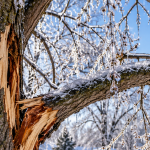
- A split between two main stems
- Hanging branches caught above the ground
- Cavities or extensive trunk damage
- Fresh soil movement around the tree base
- Exposed, broken, or lifted roots
- A lean that recently developed or increased
- Branches resting on a roof or another structure
- Previous storm damage that has not been assessed
Keep people away from areas beneath hanging limbs. Do not climb the tree or use a ladder to inspect elevated branches. Large branches can be heavy and may shift as wind or temperature changes affect the damaged area.
If a tree has already failed or presents an urgent concern, our 24/7 emergency tree service is available for storm damage, fallen trees, and hazardous limbs.
Prune Weak or Damaged Branches Correctly
Professional pruning can remove dead, broken, competing, or poorly attached branches before winter. It may also improve clearance around roofs, garages, driveways, and other parts of the property.
Pruning should be based on the tree’s structure rather than a goal of removing as much growth as possible. Excessive cutting can reduce the tree’s ability to produce and store energy. It may also leave large wounds and encourage weak replacement growth.
Our tree trimming and pruning services focus on removing selected branches while maintaining a balanced canopy. We evaluate branch size, attachment, location, and condition before deciding what should be removed.
Pruning can reduce certain visible risks, but it cannot guarantee that a tree will withstand every winter storm. Ice accumulation, wet snow, wind, hidden decay, and root problems can still contribute to damage.
Why Tree Topping Is Not Winter Preparation
Tree topping removes large portions of the canopy without following the tree’s natural structure. It should not be used as a shortcut for reducing winter storm concerns.
Large, indiscriminate cuts can trigger dense new growth that is weakly attached. Topping may also expose previously shaded bark and leave wounds that the tree cannot close effectively.
If a tree has become too large for its location, our team can evaluate whether selective pruning, structural reduction, or removal is appropriate. The recommendation should be based on the tree and site rather than a one-size-fits-all cutting method.
Water Trees Before the Ground Freezes
Trees may benefit from supplemental water before winter when fall conditions have been dry and the soil is not frozen or saturated. Moisture supports roots before frozen ground limits water movement.
Newly planted trees need particular attention because their root systems have not spread far beyond the planting area. Established trees can also experience stress when they enter winter after an extended dry period.
Water slowly enough for moisture to enter the soil instead of running across the surface. Focus on the root area rather than directing water against the trunk. Stop supplemental watering once the ground freezes, and avoid adding water to already saturated soil.
A single late watering cannot correct an entire season of drought stress. Consistent care during the growing season and fall gives the tree a better foundation for winter.
Apply Mulch Without Piling It Against the Trunk
Mulch can help moderate soil temperature and retain moisture when it is spread over the root area and kept away from the trunk. A wide, relatively level layer is more useful than a tall mound around the tree base.
Do not create a mulch volcano. Piling material against the trunk can keep bark damp, conceal damage, and create conditions that may contribute to root or trunk problems.
Before winter:
- Remove mulch that is touching the trunk
- Spread mulch outward across the root area
- Keep the root flare visible
- Avoid creating a deep mound
- Replace compacted or contaminated material when appropriate
- Check that landscape edging is not cutting into surface roots
The appropriate mulch depth can depend on the material and site. If existing mulch has accumulated over several years, remove excess material instead of adding another layer automatically.
Give Newly Planted Trees Additional Protection
Newly planted trees may need extra watering, root-zone insulation, trunk protection, and regular checks during their first winters. Their limited root systems and thinner bark can make them more sensitive to drying, cold, animal activity, and abrupt temperature changes.
Check the soil around a recent planting for settling or open gaps. Make sure the tree remains upright and that stakes or ties, if present, are not rubbing or cutting into the trunk. Support materials should not remain tight as the tree grows.
Suitable trunk guards or wraps may help protect vulnerable young bark in certain situations. They must fit correctly and should be checked regularly so they do not trap moisture or girdle the trunk. Follow the product instructions for installation and removal.
Mulch can help insulate the developing root area, but it should remain separated from the trunk. Continue watering during dry fall conditions until the ground freezes.
Reduce Deicing Salt Exposure
Deicing salt can damage trees through soil accumulation, salty runoff, and spray from nearby pavement. Property owners can reduce exposure by using only the amount needed and keeping salty snow away from tree root zones.
Do not store bags or piles of deicing material beside tree trunks. When clearing driveways and walkways, avoid placing heavily salted snow around trees and shrubs. Runoff may carry dissolved salt into the soil when snow melts.
The Michigan State University Extension winter protection guidance recommends avoiding planting areas that receive heavy deicing-salt loads and not piling salty snow around landscape plants.
Where practical, clear snow before it becomes compacted so less deicer is needed. Product choice, application rate, pavement conditions, and property safety must all be considered. Even alternatives marketed as gentler may affect plants when overused.
Handle Snow and Ice on Branches Carefully
Ice-coated or heavily loaded branches should not be shaken, struck, or pulled. Frozen branches can be brittle, and sudden movement may cause breakage or send tree material toward the person trying to clear it.
Allow ordinary snow and ice to melt naturally when the tree is stable and no immediate hazard exists. Keep people, pets, and vehicles away from branches that are bending over a driveway, entrance, sidewalk, or structure.
Do not use a ladder, pole saw, or climbing equipment to reach large or elevated branches unless you have the training and equipment required for the work. Contact our team if a branch is cracked, hanging, or affecting safe access.
After the ice or snow has cleared, inspect the tree from the ground. Damage may include torn branches, split unions, and a canopy that no longer appears balanced.
Check Trees Growing Near Buildings and Access Areas
Trees near homes, garages, driveways, fences, and walkways should be checked for clearance and visible defects before winter. The location increases the potential impact of falling limbs even when the defect itself is limited.
Look for branches scraping the roof, resting on structures, or extending over areas where vehicles are parked. Dead branches above entrances and paths also deserve attention because people use those areas regularly.
Pruning may restore appropriate clearance when the tree is structurally viable. A tree with major trunk or root damage may require a broader evaluation.
Do not attempt to cut branches above a building or between utility lines. These situations require controlled work and professional equipment.
Decide Between Pruning and Tree Removal
Pruning is appropriate when selected branches can be removed while leaving a stable tree. Removal may be necessary when the trunk, roots, or main branch structure has been seriously compromised.
Our team considers the amount of healthy structure that remains, visible defects, previous failures, tree position, and nearby property. A few dead branches may be addressed through pruning, while a severely split trunk or major root failure may make preservation impractical.
Our professional tree removal service handles dead, hazardous, storm-damaged, and structurally compromised trees. Removal methods are planned around the tree’s location and available working space.
We do not recommend removing a tree based solely on its size or normal seasonal leaf loss. A property assessment provides the information needed to compare reasonable options.
If removal leaves an unwanted stump, professional stump grinding is available as a separate service. Tell us how you plan to use the area so the work can be included in the proposed scope.
Inspect Trees Again After Winter
A spring inspection can identify branches, bark, and roots that were damaged during winter. Some problems become visible only after snow melts or the tree begins producing new growth.
Look for broken limbs, hanging branches, fresh trunk cracks, bark damage, and changes in the tree’s position. Evergreen discoloration and delayed leaf development can also justify closer observation, although appearance alone may not confirm the cause.
Avoid making an immediate diagnosis from one symptom. Winter injury, existing disease, root problems, and normal seasonal differences can produce similar signs.
Document visible changes and schedule an evaluation if the damage involves major branches, the trunk, or roots. Our tree care blog also provides information about tree maintenance, storm damage, and other property-care topics.
Frequently Asked Questions About Preparing Trees for Winter
When should I begin preparing my Genesee County trees for winter?
Begin inspections and property preparation during fall, before the ground freezes and severe winter weather arrives. Timing for pruning depends on the tree, its condition, and the work required.
Should I water mature trees before winter?
Mature trees may benefit from supplemental water when fall has been dry and the soil is not frozen or saturated. Apply water slowly over the root area instead of concentrating it against the trunk.
How much mulch should I put around a tree?
Use a moderate, level layer spread across the root area. Do not pile mulch against the trunk or cover the root flare. Existing mulch depth and the material being used should be considered before adding more.
Should snow and ice be removed from tree branches?
Do not shake, strike, or pull ice-coated branches. Allow accumulation to melt naturally when the tree is stable. Keep people away from hanging or cracked limbs and call for professional help if the damage creates a hazard.
Can pruning prevent winter storm damage?
Pruning can remove visible deadwood and address certain structural concerns, but it cannot prevent every failure. Storm severity, ice weight, wind, roots, soil, and hidden defects can still affect a tree.
How do I know whether a tree needs removal before winter?
Removal may be appropriate when a tree has major trunk damage, severe root failure, extensive decay, or structural problems that pruning cannot correct. Schedule an assessment before deciding.
Does Holtslander & Sons provide emergency service during winter?
Yes. We provide 24/7 emergency tree service for fallen trees, storm damage, split limbs, and urgent hazards. Response timing depends on conditions, accessibility, equipment needs, and current demand.
Schedule Pre-Winter Tree Service in Genesee County
Holtslander & Sons Tree Service can inspect your trees, identify visible concerns, and explain whether pruning, removal, or monitoring is appropriate before winter. Learn more about our tree service company, then call (248) 290-9906 or request a free tree service estimate to schedule an assessment.