
October 2, 2026
Genesee County, Michigan’s tree population is dominated by sugar maple, red maple, white oak, eastern white pine, and paper birch, along with fast-growing species like silver maple and Bradford pear common in newer residential developments. These species reflect the county’s USDA Hardiness Zone 6a climate, glacial clay soils, and a mix of heavy wet snow, spring storms, and hot, humid summers.
Knowing which trees you have and how each one typically responds to Genesee County’s weather makes it much easier to plan pruning, spot problems early, and avoid surprises during storm season.
Sugar Maple and Red Maple
Sugar and red maples are among the most common shade trees in Genesee County, valued for fall color and a broad, dense canopy. Both handle the region’s clay soil reasonably well, but dense canopies mean more surface area for wind and heavy wet snow to work against. This is the reason why structural tree trimming and pruning matters more on a mature maple than on a more open-branching species.
Silver Maple
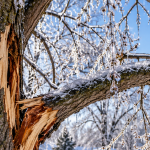
Silver maple grows fast and is common in older neighborhoods. However, it’s also one of the weaker-wooded species found locally, with a well-documented tendency toward limb breakage under heavy wet snow. Its shallow, aggressive root system can also lift sidewalks and driveways over time. Because of its brittle wood, a silver maple with visible deadwood or a split branch union is usually worth a closer look sooner rather than later.
White Oak and Red Oak
Oaks are common throughout Genesee County and generally more structurally sound than fast-growing species like silver maple, with denser wood and a slower, more predictable growth pattern. They’re not immune to problems, though oak wilt and other fungal diseases can move through a mature oak’s canopy quickly. Because oaks are relatively slow to recover from major limb loss, catching disease or structural issues early matters more here than with a faster-growing tree.
Eastern White Pine
Eastern white pine is the most common conifer in Genesee County, valued for year-round green cover and a tall, straight form. Pines carry a different set of risks than hardwoods and ice accumulation on needled branches adds significant weight. Pines are also more prone to snapping partway up the trunk than gradual limb decline, making storm-related pine damage more sudden and severe.
Paper Birch
Paper birch is a recognizable smaller tree with distinctive white, peeling bark, often planted for visual interest in front yards. It tends to struggle in prolonged summer heat and drought stress. Dieback often appears in the upper canopy first, making it a common birch problem during hot and dry stretches.
Bradford Pear
Bradford pear is a popular flowering ornamental in newer Genesee County developments, chosen for spring blooms and a tidy shape. Its branch structure is naturally weak, with narrow branch angles prone to splitting under wind or heavy wet snow. Problems tend to show up earlier in a Bradford pear’s life than in most other common local species.
Ash Trees and the Emerald Ash Borer
Ash trees were once one of the most common species across Genesee County. However, the emerald ash borer (EAB) has killed most mature ash trees in Southeast Michigan over the past two decades. Surviving or replanted ash should be monitored for thinning canopies, D-shaped exit holes, and woodpecker damage.
Dead ash wood becomes structurally unreliable quickly after the tree dies. Once an infestation is confirmed, removal is usually recommended before the tree becomes brittle and poses a hazard.
Black Walnut and American Basswood
Black walnut is found on larger, older properties throughout Genesee County and is prized for its wood and size. It produces juglone, a natural compound that can stunt or kill certain plants growing beneath it.
American basswood, also called linden, is a solid shade tree option that generally handles the region’s clay soil and winter cold well. However, it can attract aphids that leave a sticky residue on anything parked or seated beneath the canopy during summer.
How Genesee County’s Climate Shapes These Species
Genesee County sits in USDA Hardiness Zone 6a, with winter lows that regularly reach into the negative single digits alongside heavy wet snow and freeze-thaw cycles that stress root systems. Combined with the glacial clay soils common across Southeast Michigan, trees here tend to develop shallower root systems than the same species might in better-draining soil. This raises the stakes when a spring storm brings saturated ground and strong wind together.
Matching Pruning and Care to the Tree You Have
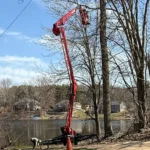
A pruning approach built for a slow-growing white oak isn’t the right fit for a fast-growing, brittle silver maple. Treating every species on a property the same way is one of the more common mistakes homeowners make. Tree trimming and pruning is built around each tree’s actual growth habit and wood strength, not a generic annual trim. A professional arborist in a tree service firm in Genesee County, MI assesses species, age, and site conditions before recommending a plan.
When Removal Becomes the Right Call
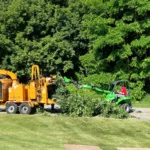
Some trees, particularly older silver maples and Bradford pears with a history of splitting, reach a point where repeated pruning is no longer solving the underlying structural problem. In those cases, tree removal protects the rest of the property, and stump grinding clears the area for replanting with a more storm-resilient species if desired.
How Holtslander & Sons Tree Service Can Help
Holtslander & Sons Tree Service helps Genesee County, MI homeowners care for trees based on their species, age, and condition. Our team can identify potential hazards, weak branches, disease symptoms, and storm-related damage before they become bigger problems.
Holtslander & Sons Tree Service provides professional tree trimming and pruning to improve structure and reduce the risk of branch failure. When a tree is severely damaged, diseased, or no longer safe, we can also handle tree removal and stump grinding. We understand the challenges local trees face from heavy snow, strong winds, clay soil, and seasonal weather changes. Our team can also help assess trees affected by emerald ash borer and other common issues. Whether you need routine maintenance or help with a hazardous tree, Holtslander & Sons Tree Service can provide a professional assessment. Book your free estimate by calling (248) 290-9906.
Frequently Asked Questions
What is the most storm-vulnerable tree species in Genesee County?
Silver maple and Bradford pear are generally the most vulnerable to storm damage locally, both prone to branch splitting under wind and heavy wet snow due to weak wood or narrow branch angles. Trees of either species near a home or driveway are worth a closer periodic look than sturdier species like oak.
Are oaks in Genesee County at risk for oak wilt?
Oak wilt is present in parts of Michigan and can move quickly through a susceptible oak once infected, which is why pruning oaks is generally avoided during the peak growing season when beetles that spread the disease are most active. Late winter dormant pruning is the safer window for oak maintenance in this region.
How does Michigan’s winter climate affect tree health compared to warmer states?
Repeated freeze-thaw cycles and heavy wet snow put more mechanical stress on Genesee County trees than warmer climates typically see, particularly on brittle or fast-growing species. Cold-hardy, well-adapted species like oak and sugar maple generally handle this better than newer ornamental plantings not suited to the zone.
Should I replace a Bradford pear with something more durable?
It’s worth considering, especially if the tree has already split once or shows narrow, crowded branch angles near the trunk. Species like sugar maple, oak, or serviceberry tend to hold up better to Genesee County’s wind and snow load over the long term.
Does Holtslander & Sons Tree Service help identify tree species and assess their condition?
Yes. Our team identifies species and evaluates structural conditions as part of every estimate, so you know not just what’s wrong but why that particular species is behaving the way it is. You can request a free estimate and we’ll walk the property with you.
Is it worth saving an ash tree if the emerald ash borer has reached my property?
In most cases, no, unless the tree is under active preventative treatment before symptoms appear. Once significant canopy dieback is visible, the infestation is typically too advanced to reverse, and removal before the wood becomes brittle is the safer path for the rest of your property.
What should I plant instead of a species prone to problems in Genesee County?
Sugar maple, white oak, and American basswood are generally solid, storm-resilient choices for this climate and soil type. The exact right fit depends on your yard’s drainage, sun exposure, and how close you’re planting to structures, which is worth discussing during a site visit.