September 24, 2026
Fall weather changes trees in Genesee County, MI by triggering dormancy and draws nutrients back into the roots and gradually reduces moisture and flexibility. This loss of flexibility makes summer wood far more prone to breaking. Consequently, early fall is the right window to plan pruning. Doing this early helps protect trees before winter’s ice and heavy snow arrive.
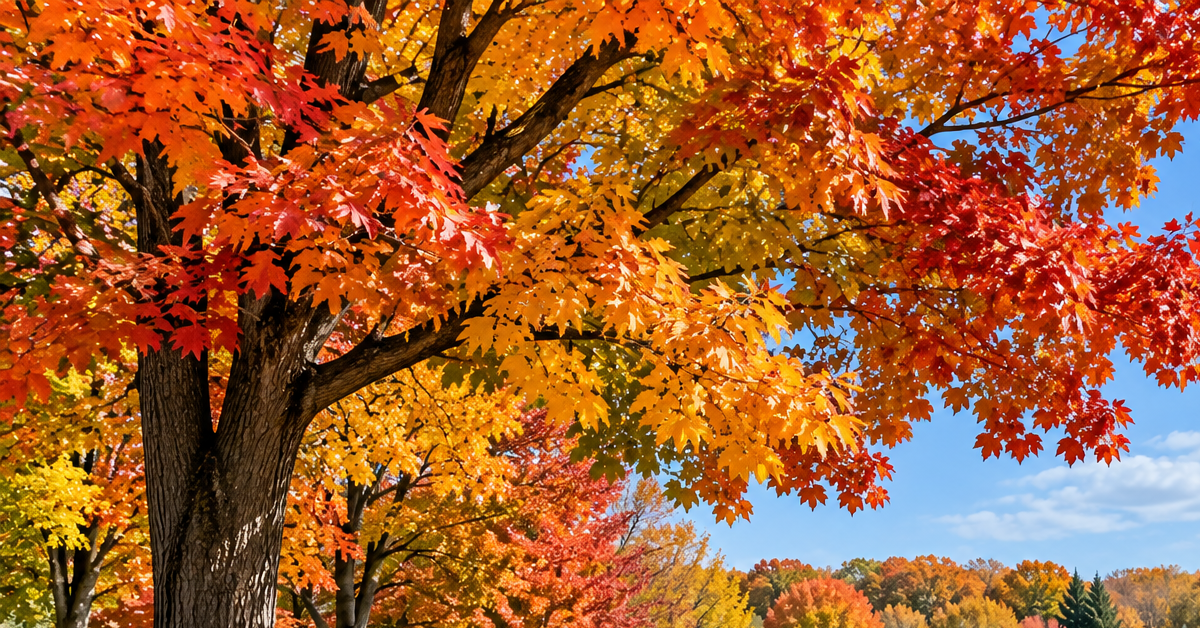
Cooling temperatures and shorter days signal deciduous trees to pull chlorophyll. They begin drawing it out from their leaves while slowly halting growth. This natural process is what produces vibrant fall color before leaf drop. That same seasonal shift also affects how well a tree handles severe weather. It impacts a tree’s ability to withstand wind, wet snow, and freezing temperatures. Once winter sets in, structural weaknesses become major risks. Therefore, fall is one of the most important seasons to act. Homeowners need to get ahead of tree issues before the weather worsens.
Fall Color as a Health Indicator
Beyond its visual appeal, fall foliage reflects a tree’s internal health. Healthy trees typically display an even, gradual color shift across the canopy. Chlorophyll breaks down on schedule, moving predictably from outer edges inward.
In contrast, uneven color patterns often point to underlying stress. A tree with patchy color, early-turning branches, or foliage browning prematurely is likely signaling distress. These symptoms usually indicate drought, root damage, disease, or prior storm injury rather than a simple early fall.
Why Fall Is the Best Time to Plan Structural Pruning
As trees enter dormancy, sap flow slows and the risk of disease spreading through open pruning cuts drops significantly compared to spring and summer. It’s also easier to see a tree’s actual branch structure once leaves have thinned or dropped, which makes it simpler to spot crossing limbs, weak unions, and deadwood before they’re hidden by a full canopy. A professional tree service firm in Genesee County, MI can perform tree trimming and pruning in fall to get ahead of winter’s added stress rather than reacting to it after a storm.
Falling Leaves Reveal Hidden Problems
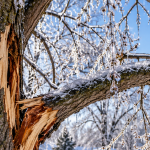
As the canopy thins out in fall, deadwood that remained hidden all summer becomes clearly visible. Bare branches make it easy to spot cracked or split limbs across the tree. Cavities, structural decay, and old storm damage also stand out once the dense foliage drops. This seasonal shift makes fall the ideal time to walk your property and inspect your landscape. Look up and check each tree carefully for signs of weakness or disease.
Catching these structural issues early allows you to address them promptly. Proper care now protects your trees before ice and heavy snow add dangerous weight during winter.
Cooling Temperatures and Root Activity
While growth above ground slows in fall, root systems actually stay active longer, continuing to take up water and store energy for winter and next spring’s growth. This makes fall a good time for mulching and soil care around the base of trees, since roots are still working to build reserves even after the leaves are gone. Compacted or poorly drained soil which is common in parts of Genesee County’s glacial clay limits how well roots can take advantage of this window, which is one more reason mature trees in heavier soil sometimes need extra attention heading into winter.
Preparing Trees for Michigan’s Winter Weight
Genesee County’s winters bring a combination of heavy wet snow, ice accumulation, and sustained freezing temperatures. All of this adds significant weight and stress to a tree’s canopy. Removing deadwood and thinning overly dense growth in fall reduces the surface area that snow and ice can build up on, lowering the odds of limb failure once real winter weather arrives. Species like silver maple and Bradford pear, both prone to weak branch unions, benefit especially from a fall inspection before the first heavy snow. The Michigan Department of Natural Resources notes that ice and heavy wet snow are among the leading causes of tree limb failure statewide each winter, underscoring why this pre-winter window matters as much as it does.
Fall Storms and Saturated Soil
Fall in Southeast Michigan isn’t only about falling leaves. The season also brings its own share of wind and heavy rain events that can saturate soil ahead of the first freeze. A tree that’s already carrying deadwood or a compromised root system is more likely to fail during one of these fall storms than a well-maintained one. If a fall storm does bring a tree or large limb down on your property, call a local tree service firm in Genesee County, MI for emergency tree services.
What to Watch for as Temperatures Drop
Unusually early leaf drop, patchy color, and prematurely bare branches deserve a second look. These symptoms often signal underlying stress, disease, or root damage rather than a normal seasonal shift. Trees already struggling heading into winter face a much harder time recovering from cold injury. Genesee County sits in USDA Hardiness Zone 6a, and trees already stressed heading into a zone-6 winter have a harder time recovering from cold damage than healthy ones. Catching these signs in fall, rather than waiting until spring reveals the damage, gives a tree a much better chance of coming through winter intact.
A Practical Fall Checklist for Genesee County Properties
A short walk-around in early-to-mid fall covers most of what matters:
- check for deadwood now visible through thinning leaves
- look at the base of large trees for soil cracking or heaving after recent rain, and
- note any branches that seem to be losing leaves out of step with the rest of the tree.
- If anything looks off, scheduling an inspection before the ground freezes is far easier than trying to address a problem once snow is already on the ground.
When a Tree Won’t Make It Through Winter
Sometimes a fall inspection reveals a tree that cannot be saved by pruning alone. Advanced decay, major root damage, and severe storm weakness create high risks. Under heavy ice and wet snow, a compromised tree poses a serious threat.
In those cases, tree removal before winter is the safer option, since a compromised tree under a heavy load of ice or wet snow is far more dangerous to deal with once the ground is frozen and access is limited.
Holstandar & Sons Tree Service helps Genesee County, MI homeowners navigate fall weather shifts by delivering expert property protection before severe winter conditions arrive. Our certified arborists perform detailed structural inspections to spot hidden deadwood, decay, and uneven canopy stress through thinning autumn leaves.
To minimize winter risk, our team executes strategic structural trimming & pruning that reduces heavy canopy weight from future ice and snow. We assess soil health, root vitality, and species-specific vulnerabilities suited for USDA Hardiness Zone 6a conditions. If an inspection uncovers severe structural failure or advanced decay, we safely perform pre-winter tree removals before the ground freezes. With dedicated equipment, local experience, and responsive fall storm cleanup, Holstandar & Sons Tree Service provides complete tree care solutions that keep local properties safe all year long. Call us now to protect your trees before the fall weather.
Frequently Asked Questions
Is fall really a better time to prune than spring in Genesee County?
For most species, yes. Dormant-season pruning in fall and winter reduces disease transmission risk and stress on the tree, and it’s easier to see the full branch structure once leaves have dropped. Spring pruning is sometimes preferred for specific flowering species, but structural work is generally best done in the fall-to-winter window.
Why do some trees drop their leaves earlier than others in the fall?
Timing varies by species, but unusually early or uneven leaf drop compared to a tree’s normal pattern can also signal drought stress, root damage, or disease rather than a simple seasonal shift. If one tree is noticeably ahead of similar trees nearby, it’s worth having it checked.
Does raking leaves away from the base of a tree matter for its health?
A thin layer of leaf litter can actually help insulate roots and add organic matter as it breaks down, but a thick, matted layer against the trunk can trap moisture and encourage rot. Michigan State University Extension recommends keeping mulch and leaf litter a few inches back from the trunk itself for this reason.
How does fall weather affect newly planted trees differently than mature ones?
Newly planted trees have less-established root systems and are more vulnerable to frost heave and drying winter wind than mature trees with deeper roots. Extra mulch and consistent watering through fall, before the ground freezes, helps young trees enter winter with better reserves.
Should I schedule tree service before or after the first snow?
Before, whenever possible. Access is easier, ground conditions are safer for equipment, and addressing weak limbs or deadwood before heavy snow arrives prevents the kind of emergency calls that come in once winter weight has already caused a failure.