September 30, 2026
Key Takeaways
- Freeze-thaw cycles in late winter can weaken bark, wood fibers, and root anchorage in mature trees, sometimes without obvious outward signs.
- Genesee County’s tree canopy supports stormwater management, energy savings, property values, and neighborhood character across its communities.
- Ice storms can cause internal cracking, including bark failures, and root-plate loosening that isn’t visible from the ground.
- A professional inspection after a hard freeze-thaw season or ice event is the most reliable way to catch hidden structural weaknesses.
- Holtslander and Sons Tree Service works with homeowners throughout Genesee County to assess risk before a damaged tree becomes an emergency.
Late-winter freeze-thaw cycles can make mature trees more dangerous by widening existing cracks and weakening wood, bark, and root anchorage. Repeated freezing and thawing places extra stress on old wounds, cavities, and included bark unions. In Genesee County, Michigan, temperature swings from hard freezes to warmer afternoons can accelerate these hidden weaknesses.
A tree that looked stable in fall may develop cracks, lean, or become more likely to drop a limb by late winter. Because much of this damage can remain hidden, a professional inspection can help identify risks before failure occurs.
Why Mature Trees Face Greater Freeze-Thaw Stress
Mature trees have spent decades responding to wind, storms, pruning, disease, soil changes, and seasonal weather. That history can leave behind structural weaknesses that are not always easy to see. Old branch wounds, cavities, cracks, weak branch unions, and areas of included bark can all become potential points of failure when winter conditions repeatedly change.
Freeze-thaw cycles add another layer of stress. Moisture can enter small openings in bark, wood, or old wounds. When temperatures fall below freezing, that moisture freezes and expands. When temperatures rise again, the ice melts and the wood contracts. A single freeze-thaw event may have little effect, but repeated cycles can gradually enlarge existing weaknesses.
This does not mean every mature tree exposed to freezing temperatures will become hazardous. Tree species, health, structure, soil conditions, previous damage, and exposure to wind and ice all influence risk. However, an older tree with existing structural defects has less margin for additional stress than a young, healthy tree with strong branch attachments and undisturbed roots.
How Freeze-Thaw Cycles Affect Roots and Soil
Freeze-thaw damage is not limited to branches and trunks. The ground around a tree also responds to changing temperatures. Frozen soil can expand, heave, and shift before settling again during a thaw. Repeated movement can disturb the soil surrounding a tree’s roots and, in some circumstances, affect the stability of the root plate.
This can be particularly important for mature trees growing in compacted areas, poorly drained soil, or locations where roots have limited room to expand. Trees with shallow or compromised root systems may have less anchorage available to resist movement.
Homeowners should pay attention to changes around the base of a tree. New soil cracks, raised sections of ground, exposed roots, standing water, or a noticeable change in the tree’s lean can indicate that conditions around the root system deserve closer attention.
A subtle change may not mean immediate failure is likely, but it should not be ignored, particularly when combined with heavy ice, strong winds, or visible cracks in the trunk or major limbs.
Why Late Winter Can Be a High-Risk Period
Winter tree risk does not necessarily end after the first major snow or ice event. In fact, late winter can bring a combination of conditions that puts additional stress on mature trees.
Cold periods may be followed by sunny, above-freezing afternoons, only for temperatures to drop below freezing again overnight. This repeated pattern creates cycles of expansion, contraction, melting, and refreezing.
At the same time, accumulated snow and ice can add significant weight to branches. A weakened limb that remained intact during an earlier storm may become more vulnerable as temperatures fluctuate and additional weather systems move through the area.
Late winter can also transition quickly into windy spring conditions. A branch with a compromised union may survive the initial ice event but fail later when exposed to ordinary wind. That is why a tree that appears to have “made it through” an ice storm should not automatically be considered undamaged.
Signs Homeowners Should Watch For
Some freeze-thaw and ice-storm damage is hidden, but there are visible warning signs homeowners can look for from a safe distance.
Watch for:
- New cracks in the trunk or major limbs
- Cracks that appear to be widening
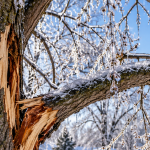
- Bark that is lifting, splitting, or separating from the wood
- A new or worsening lean
- Soil heaving, cracking, or disturbance around the trunk
- Large limbs that have changed position
- Broken branches hanging in the canopy
- Fresh sawdust-like material or other evidence of decay or insect activity
- Visible damage where two major limbs join.
- Unusual movement of a branch during moderate wind.
Homeowners should avoid climbing trees or standing underneath damaged limbs to investigate them. A cracked branch can fail without much warning, particularly during windy or changing weather.
The Hidden Damage an Ice Storm Can Cause
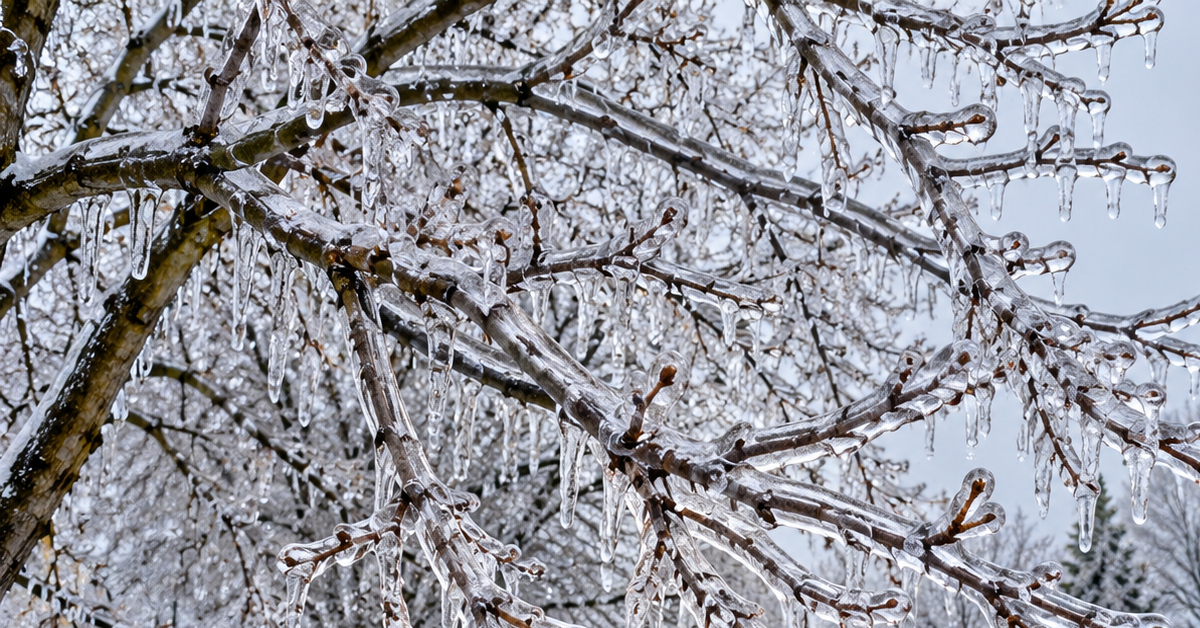
Ice storms can be especially challenging because the most important damage may not be immediately visible. When freezing rain coats branches, the additional weight places substantial stress on limbs, branch unions, and the trunk.
A branch does not necessarily have to break during the storm to be weakened. Excessive loading can create cracks or damage within the wood that reduces the branch’s remaining strength. Later, wind or another weather event can provide the final force needed for failure.
Included bark is another concern. This occurs when two stems or branches grow together at a narrow angle and bark becomes trapped between them. Because the bark is weaker than solid wood, these unions can be structurally vulnerable. Ice pulling downward or outward on the attached limbs can increase stress at the union.
The result may be a partial split rather than an immediate, complete break. From the ground, the tree can still appear relatively normal even though the attachment has been compromised.
Root-Plate Damage Can Be Difficult to See
The root plate, the area of major roots and surrounding soil that helps anchor a tree is another potential concern after severe weather.
When a tree’s canopy becomes heavily coated with ice, the added weight can shift the tree’s center of gravity. If the crown is unevenly loaded, the tree may experience additional movement at its base. Repeated freezing and thawing can also change the condition of the surrounding soil.
Signs of root or soil disturbance may include –
- a new lean, cracks radiating through the soil near the trunk
- raised soil on one side of the root flare
- exposed roots.
These signs warrant professional evaluation, especially if they appear after a major ice event. A tree with compromised anchorage may become more vulnerable to future wind, saturated soil, or additional ice accumulation.
The Importance of Genesee County’s Mature Tree Canopy
Mature trees are an important part of communities throughout Genesee County, Michigan. They line residential streets, shade yards, surround parks, and contribute to the character of established neighborhoods. Their value goes beyond appearance.
Healthy trees intercept rainfall, provide shade, contribute to wildlife habitat, and can help moderate conditions around homes and other properties. Tree roots also interact with soil and water, while canopy can intercept precipitation before it reaches the ground.
For homeowners, mature trees can also contribute to curb appeal and the overall appearance of a property. Removing a large tree is therefore not simply a matter of eliminating a potential hazard. When a tree can be safely retained, proper inspection, pruning, and maintenance can help preserve the benefits it provides.
That makes proactive tree care particularly important. The goal is not to remove every tree that has experienced winter stress. The goal is to identify structural problems, understand the level of risk, and determine what action if any is appropriate.
What Homeowners Should Do After an Ice Storm
A quick visual check can help identify obvious problems immediately after an ice storm, but homeowners should not attempt to inspect dangerous areas themselves.
Once ice has melted and conditions are safe, look for changes in the canopy, trunk, major branch unions, and soil around the tree. Compare the tree with how it looked before the storm whenever possible.
If you notice significant cracks, hanging limbs, a new lean, damaged branch unions, or soil movement, arrange for a professional assessment. A professional tree service firm in Fenton, Michigan can evaluate structural defects that may not be apparent to an untrained observer.
Depending on the findings, recommendations may include corrective pruning, removal of damaged tree branches, structural support such as cabling in appropriate situations, monitoring, or tree removal when the risk cannot reasonably be managed.
Prompt attention can also help homeowners prioritize hazards. A large cracked limb over a driveway, home, sidewalk, or frequently used area deserves greater attention than damage located far from potential targets.
How to Reduce Freeze-Thaw and Ice Storm Risk
Winter damage cannot always be prevented, but good tree care can reduce the likelihood that an existing weakness becomes a serious problem.
Routine inspections can identify defects before winter arrives. Proper pruning can reduce weak or poorly attached branches, while correcting structural problems when trees are younger can sometimes prevent more complicated issues later in their development.
Homeowners should also pay attention to site conditions. Poor drainage, compacted soil, construction activity, and restricted root space can all affect tree health and stability.
After a significant ice event, avoid the temptation to shake ice from branches or attempt to cut high limbs yourself. Improper cutting can create additional injuries, and working around ice-covered or damaged branches can be dangerous.
For mature trees with a history of storm damage, visible defects, or significant structural concerns, professional evaluation is the safest way to determine whether additional action is needed.
Holtslander & Sons Tree Service can inspect mature trees for cracked limbs, weak branch unions, leaning, and other signs of winter damage. If damaged branches threaten people or property, our emergency tree services can help address the hazard safely. Corrective pruning may reduce the risk of further branch failure, while severely damaged trees can be assessed for removal. After an ice storm, we can help determine which issues need immediate attention and which can be safely monitored.
Frequently Asked Questions About the Impact of Freeze-Thaw Cycles on Mature Trees in Winters in Michigan
How soon after an ice storm should a tree be inspected?
An initial visual check can be made once conditions are safe, but a more thorough assessment is often easier after the ice has melted. This allows cracks, leaning, hanging branches, and soil disturbance to be evaluated more clearly. Trees with obvious damage or a new lean should be assessed promptly.
Can a tree that survived an ice storm still fail later?
Yes. A tree can remain standing after an ice event while still having weakened branch unions, internal cracks, or compromised roots. Subsequent wind, additional ice, or other loading can cause a damaged limb or section of the tree to fail later.
Do freeze-thaw cycles affect young trees the same way?
Not always. Young trees can certainly experience winter damage, but mature trees often have more accumulated wounds, cavities, weak unions, and structural history. These existing conditions can make repeated freeze-thaw stress more significant.
Are all mature trees in Genesee County at risk during late winter?
No. Risk varies according to species, tree health, structure, site conditions, previous damage, root stability, and weather exposure. A mature tree that is healthy and structurally sound may have considerably less risk than one with existing defects.
What can homeowners do to reduce winter tree risks?
Regular professional inspections, appropriate pruning, good soil and drainage conditions, and prompt evaluation after severe ice or wind events can all help reduce risk. Homeowners should also avoid attempting hazardous tree work themselves.
Summary Checklist: Late-Winter Tree Risk
| Evaluation Area | What to Check |
| Freeze-thaw exposure | Cracks, cavities, wounds, and weak unions |
| Root stability | Soil heaving, cracking, exposed roots, or new lean |
| Ice-storm damage | Hanging limbs, splits, broken branches, or altered branch position |
| Trunk condition | Cracks, cavities, bark separation, or visible decay |
| Branch structure | Included bark and weak or poorly attached limbs |
| Site conditions | Drainage, soil compaction, and restricted root space |
| Pruning history | Previously identified or corrected structural defects |
| Professional inspection | Recommended timing, scope, and follow-up |
Final Advice
Treat freeze-thaw damage as a reason to inspect your trees, not automatically remove them. Watch for cracked limbs, bark separation, leaning, soil movement, or weak branch unions after severe winter weather. Early assessment may allow problems to be managed through pruning, support, or monitoring. Mature trees with existing damage need particular attention before another storm adds stress. A professional inspection can help identify hazards before they become emergencies.
Holtslander & Sons Tree Service can inspect trees and identify hazards after ice storms and freeze-thaw events. Our team can provide emergency tree services, pruning, or tree removal when winter damage creates a serious safety risk. Acting early can help prevent minor winter damage from becoming a more serious safety concern.