July 1, 2026
Fenton homeowners do not call a tree removal company because they want to. They call because something has gone wrong. A 70-foot ash next to the house has finally lost its canopy after years of emerald ash borer pressure. A heavy March ice storm has split a silver maple over the driveway. A red oak on the lakeside of the property has started dropping bronzed leaves in the middle of July. A windstorm off Lake Fenton has uprooted a mature pine that looked completely healthy the week before.
When that call needs to happen, the decision about who shows up matters more than most homeowners realize. Tree removal is one of the most dangerous trades in the country. A 60-foot tree leaning toward a roof is a physics problem with no margin for error. The difference between a clean removal and a six-figure property damage claim is often a matter of who is rigging the load and whether they have been trained to ANSI A300 standards.
Key Takeaways
- Fenton’s mix of mature lakefront properties, older downtown lots, and rapidly growing subdivisions creates four very different tree removal contexts in the same zip code.
- Emerald ash borer, oak wilt, late-season ice damage, and high-wind events from the Lake Fenton corridor drive most removal calls in the area.
- The single biggest cost most Fenton homeowners pay for hiring the wrong tree crew is not the bill itself but the property damage, liability exposure, and rework that follow.
- ISA certification, TCIA accreditation pathway, full general liability and workers’ compensation insurance, and ANSI A300-trained crews are what separate professional removal from a chainsaw and a pickup truck.
- Holtslander & Sons operates as a multi-generational tree service rooted in Genesee County, which means the crew that shows up has worked on the exact tree species, soil types, and storm patterns your property sits in.
This article walks through why Fenton homeowners reach for Holtslander & Sons when that call needs to be made, what the real differences look like in the field, and how to evaluate any tree service before you sign anything.
Why Tree Removal in Fenton Is Not a Generic Job
Fenton is not one neighborhood. The tree population on a 1920s home near downtown looks nothing like the tree population on a new subdivision lot off Thompson Road, which looks nothing like the lakefront tree cover on Lake Fenton or Lobdell Lake. Each context creates different removal challenges.
Older Downtown and Near-Lake Neighborhoods
Mature oak, maple, walnut, and ash dominate the older Fenton neighborhoods. Many of these trees were planted 60 to 100 years ago. They have grown into and around homes, garages, fences, and overhead service drops. Removing a 90-foot silver maple from a tight backyard between two houses is not a drop-and-cut job. It is rigging, crane planning, and load control done by people who have done it many times before.
Lakefront Properties
Lake Fenton, Lobdell Lake, Silver Lake, and the smaller surrounding lakes shape an entirely different set of removal conditions. Lakefront trees deal with chronic wind exposure, often shallower root systems on sandy lakeshore soil, and decay patterns from saturated ground. Many lakefront removals involve trees leaning over docks, boat lifts, and shoreline structures. Equipment access can be limited to a single side. The wrong cut in the wrong sequence drops the canopy into the water or onto a dock.
Newer Subdivisions
The subdivision growth around Fenton has resulted in a younger tree population planted in graded-fill soil. Many of these trees were installed with root flares buried too deep or staked too long. Storm damage and structural failure on these younger trees are common in years 10 through 20 after planting, often catching homeowners off guard.
Rural Properties Outside Fenton City Limits
The transition into Tyrone Township, Fenton Township, and the rural land toward Linden produces yet another removal context: large multi-tree clearings, hazard trees over outbuildings and barns, and woodlot management. This is more typically chainsaw and equipment work, but still demands proper safety and rigging when trees are near anything of value.
A tree service that does not understand which of these contexts you fall into is not the tree service you want quoting your job.
The Tree Threats Driving Removal Calls in Genesee County
Emerald Ash Borer
According to the USDA Forest Service, the emerald ash borer was first identified in southeast Michigan in 2002 and has killed tens of millions of ash trees since. Genesee County was hit early and hard. The mature ash population in Fenton, Flint, Grand Blanc, Burton, and the surrounding area was substantial in older neighborhoods, and most of it is now gone or dying.
The danger with dead ash is that it does not behave like other dead trees. Ash wood becomes brittle quickly after death. Limbs that look stable from the ground can shear off without warning, especially in wind. Untreated ash trees that have been dead for two or more years should be considered hazards regardless of how they look.
Oak Wilt
The Michigan Department of Natural Resources has confirmed oak wilt in more than 60 of Michigan’s 83 counties, with Genesee County included. Red oaks die within four to six weeks of visible symptoms. The disease moves underground through root grafts and above ground through sap-feeding beetles attracted to fresh pruning wounds. Once symptoms appear in a Fenton neighborhood with multiple red oaks, the clock is short for the surrounding trees.
Late-Season Ice Storms
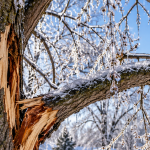
Ice events in March and early April catch trees at their most vulnerable. Late-season ice loads added to wood that has been stressed all winter produce sudden branch failure on trees that looked completely healthy. This is one of the most common hidden-damage scenarios we encounter, and a separate guide on this site covers it in detail.
Wind Exposure Off the Lakes
Lake Fenton and the surrounding water bodies create wind tunnel effects on adjacent properties. Mature trees with shallow lakeside root systems take the brunt of straight-line summer thunderstorm winds and winter gusts. Many of these failures happen on trees that show no obvious warning signs.
What Separates a Professional Tree Removal From a Cheap One
Michigan does not require a state license to operate a tree service. Anyone with a chainsaw and a pickup truck can call themselves a tree company. This is why third-party verification matters more in this trade than in almost any other home service.
ISA Certified Arborist on the Job
The International Society of Arboriculture Certified Arborist credential requires a minimum of three years of full-time field experience, passing a comprehensive exam, and ongoing continuing education. When an ISA Certified Arborist evaluates your tree, they are making a documented professional assessment, not a sales pitch.
You can verify any arborist’s credentials directly through the ISA Find an Arborist tool.
Full Insurance Coverage
The two policies that matter most:
- General liability: Covers property damage caused during the job. Look for $1 million minimum per occurrence.
- Workers’ compensation: Covers crew injuries on your property. Without this, an injured worker can pursue the homeowner directly under Michigan premises liability law.
A legitimate tree service can produce a certificate of insurance (COI) within minutes, sent directly from the insurance carrier with your name listed as certificate holder. Anyone who hesitates, gives excuses, or sends a screenshot of a paper certificate is telling you what you need to know.
ANSI A300 Training
The ANSI A300 standard governs how cuts are made, how loads are rigged, how worksites are set up, and how trees are pruned. Crews trained to A300 leave clean cuts that allow trees to compartmentalize wounds properly, rig heavy sections so they descend in controlled motion, and protect lawn, beds, and hardscape during the work. Untrained crews leave torn bark, flush cuts that invite decay, ruts in the lawn, and damaged irrigation lines they did not know were under the access path.
Written Estimates With Itemized Scope
Verbal pricing for tree removal is a problem. A proper written estimate spells out:
- The specific trees being removed
- Whether stumps are ground out and to what depth
- How debris is handled (full chip haul versus wood left on site)
- Permit coordination if required
- Power line coordination if needed
- Timeline and payment terms
There is no reason for any of this to be unclear before the crew arrives.
What Holtslander & Sons Brings to the Job
A multi-generational tree service brings something that newer operations cannot manufacture: knowledge of the local trees, the local soil, the local weather patterns, and what has gone wrong on similar properties before. The crew that shows up on a Fenton lakefront property has worked on dozens of similar properties. The crew that handles your oak in an older Fenton neighborhood has handled the same species, of similar age, on streets close to yours.
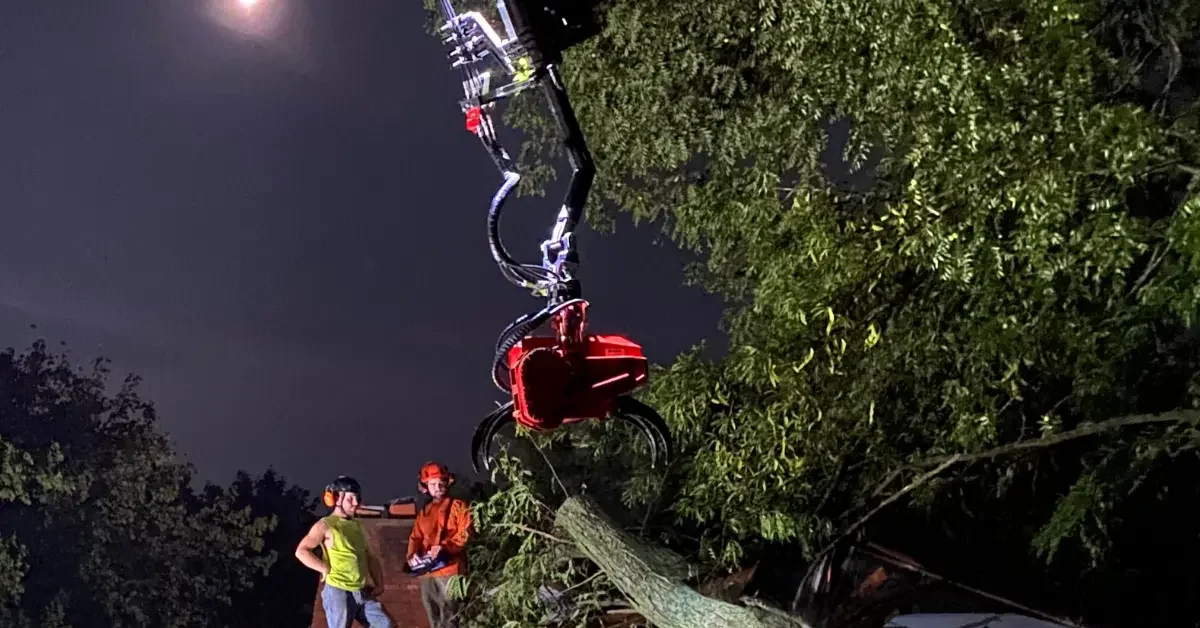
Holtslander operates with ISA Certified Arborists on site, ANSI A300 training across crews, full general liability and workers’ compensation coverage, and the equipment to handle everything from a single small tree to a multi-tree removal requiring crane and rigging coordination. Written estimates spell out the full scope.
What We Commonly See In The Field
The most common pattern is the homeowner who got three quotes and chose the cheapest. Two weeks after the work, they call to ask whether the stump was supposed to be ground deeper, whether the lawn ruts are something we can fix, and whether we can chip the brush pile that was left at the curb when the original crew did not come back to finish.
The bigger pattern is the cost. The bill to fix the mistakes (lawn restoration, irrigation repair, replanting, additional grinding, brush hauling) almost always exceeds what an accredited company would have charged in the first place.
The most expensive version of this pattern: a removal job where the original crew dropped a section into the homeowner’s roof, the contractor had no real general liability coverage, and the homeowner’s policy ended up paying the claim. That happens in Genesee County every year.
What Fenton Homeowners Can Do Right Now
If you have a tree you suspect needs to come down:
- Photograph the tree from multiple angles and note when symptoms first appeared
- Avoid any pruning of oaks between April 15 and July 15 in Michigan, even if the branch looks dead
- Do not let solicitors who knock on the door after a storm talk you into immediate decisions
- Get a written estimate from at least one ISA Certified Arborist before agreeing to anything
- Verify insurance directly through the carrier, not a piece of paper handed to you on-site
If the tree is leaning toward a structure, dropping limbs, or has clearly failed, the call should happen the same day.
Frequently Asked Questions
How much does tree removal cost in Fenton, MI?
Cost depends on tree size, species, location relative to structures, access, and whether stump grinding is included. A small open-yard tree differs significantly from a large tree over a house, requiring crane work. Written estimates are provided after an on-site assessment.
Does homeowners insurance cover tree removal in Fenton?
Insurance typically covers removal when a tree falls on a covered structure during a covered event such as a storm. Insurance usually does not cover proactive removal of a hazardous tree before it falls or trees that fall only in the yard. Confirm details with your insurance agent.
How fast can Holtslander respond to emergency tree calls in Fenton?
Emergency calls during business hours are typically reached the same day, with priority dispatch during active storm events. Genesee County storm response is one of our core capabilities.
Do I need a permit to remove a tree in Fenton, MI?
Trees on private residential property in Fenton generally do not require a permit. Trees in city right-of-way, in regulated wetland zones, or in utility easements may require permits or coordination. Confirm with the City of Fenton or your township before scheduling.
What is ANSI A300, and why does it matter for tree removal?
ANSI A300 is the American National Standard for tree care operations. It governs how cuts are made, how loads are rigged, and how worksites are set up. Crews trained to A300 leave cleaner work, cause less collateral damage, and operate more safely than untrained crews.
How do I verify a tree company’s insurance in Michigan?
Ask for a certificate of insurance sent directly from the insurance carrier or agent, listing you as the certificate holder. Verify that both general liability and workers’ compensation are current. Anyone who cannot provide this should not be working on your property.
Are ash trees in Fenton still worth treating?
If less than 30 percent of the canopy shows dieback, systemic insecticide injection can save the tree. Past that point, removal is usually the safer call because dead ash wood becomes brittle and unpredictable.
Call Holtslander & Sons for Tree Removal in Fenton, MI
If you have a tree in Fenton that needs to come down, the right call is a same-day estimate from a crew that has done this exact work hundreds of times in your area. Storm-damaged trees do not stabilize on their own. Dead ash trees become more dangerous with every freeze-thaw cycle. Oak wilt spreads through neighboring trees within weeks of symptoms.
Reach Holtslander & Sons Tree Service for a written estimate on tree removal in Fenton, Linden, Grand Blanc, Flint, Holly, and the broader Genesee County area.