July 22, 2026
Most homeowners assume the job is finished once a tree comes down. In reality, the stump left behind can create ongoing problems for years. It may produce root sprouts, attract insects, interfere with mowing, take up valuable yard space, and become a tripping hazard for family and guests.
That’s why stump grinding is often considered the final step in a complete tree removal project. Grinding the stump below ground level helps eliminate future maintenance issues, improves the appearance of your landscape, and makes the area usable again for grass, landscaping, or other outdoor improvements.
If you’re planning tree removal in Genesee County, including Fenton, Grand Blanc, Linden, Burton, Davison, or Flushing, understanding the benefits of stump grinding can help you avoid future headaches and get the most value from your tree service investment.
What Stump Grinding Actually Does
Stump grinding is not the same as stump removal. Those two terms are often used interchangeably, but they describe different approaches with different outcomes.
Full stump removal involves pulling the entire root system out of the ground. This is physically intensive, requires heavy equipment, and leaves a large hole that needs to be backfilled. It is rarely necessary for residential properties and is far more disruptive than most homeowners want.
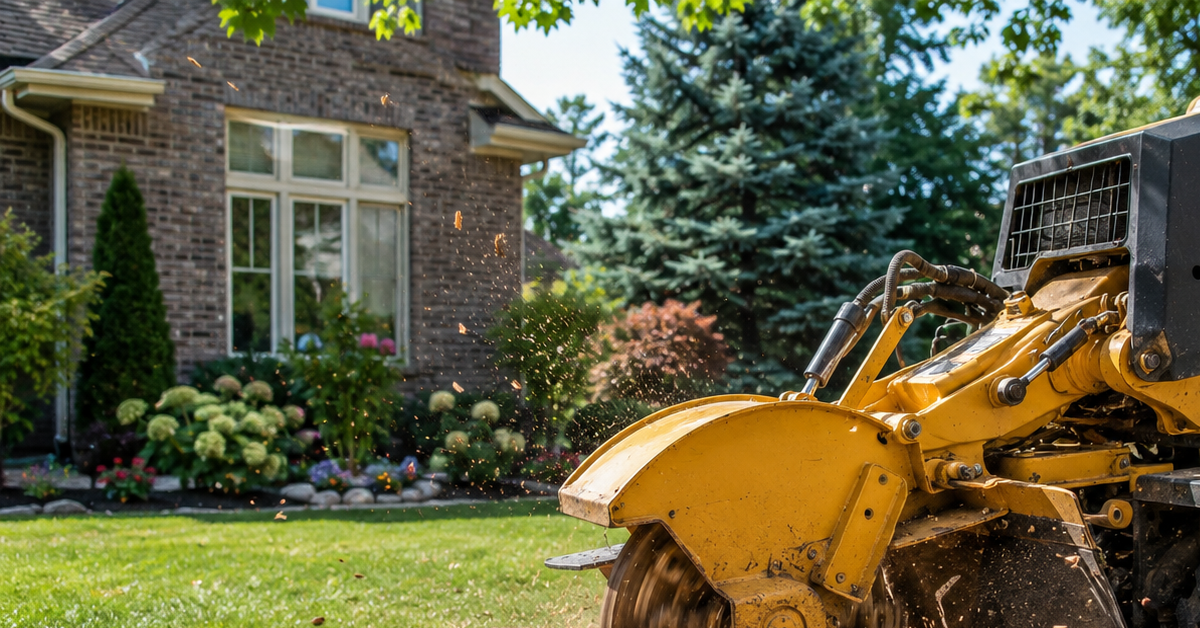
Stump grinding uses a specialized machine to mechanically chip the stump down below ground level. The cutter wheel on a stump grinder features carbide-tipped teeth that progressively chip away the wood in overlapping passes. The result is a cavity filled with wood chips and grindings, with the surface area ready for filling with soil and reseeding.
In our experience across Genesee County, most residential stumps are ground between six and twelve inches below grade. For homeowners planning patios, sheds, or hardscape installations, deeper grinding may be recommended.
If your tree removal was handled by Holtslander, ask about scheduling stump grinding at the same time. Combining both services into one project is more efficient and costs less than returning for a separate appointment.
Leave the Stump vs. Grind the Stump: A Clear Comparison
Before getting into the details, here is a side-by-side look at what each choice actually means for your property.
| Leave the Stump Behind | Choose Stump Grinding |
|---|---|
| Trip hazard for family and guests | Safer, level yard surface |
| Attracts insects and pests | Reduced pest concerns |
| Regular mowing obstacles | Easier lawn maintenance |
| Ongoing root sprouting | Little to no regrowth |
| Promotes wood decay and fungi | Removes the source of decay |
| Takes up valuable yard space | Restores usable landscape area |
| Hurts curb appeal | Improves property appearance |
The long-term difference is significant. A stump left behind after tree removal is not neutral. In most cases, the problems become more noticeable and expensive to address over time.
Why Leaving a Stump Behind Creates Real Problems
Fungal growth and decay. Once a tree is cut, the stump becomes a host for wood-decaying fungi. These organisms break down the organic material in the stump, and while decomposition is natural, it can spread fungal issues to nearby living trees and shrubs if left unchecked over a long period. Michigan State University Extension’s plant diagnostics resources document several fungal pathogens that establish on decaying stumps and can affect surrounding landscape plants and trees.
Root sprouting. Many tree species in Michigan attempt to regenerate after removal by sending up new shoots from the root system or the base of the stump. Silver maple, poplar, and some oak varieties are particularly aggressive sprouters. Without grinding the stump, you may find yourself pulling or cutting new growth throughout the growing season, year after year.
Pest attraction. Decaying wood attracts insects that prefer damaged or dead organic material. Carpenter ants and various wood-boring beetles are common in Michigan and will colonize an untreated stump. While these insects typically stay within the dead wood, they can become a concern for nearby structures or live trees if populations grow unchecked.
Mowing and yard maintenance obstacles. A stump in the middle of a lawn requires mowing around it, creates an uneven surface, and makes it impossible to use that area of the yard for anything useful. Over time, the surrounding grass often dies back because of root competition from the decomposing stump.
Trip and liability hazard. Ground-level stumps are easy to miss, particularly in dim conditions or when grass grows around the edges. They present a genuine tripping hazard for children, guests, and anyone moving through the yard without paying close attention to the ground.
Signs It’s Time to Grind an Existing Stump
Not every homeowner schedules stump grinding immediately after tree removal. If a stump has been sitting in your yard for months or even years, watch for these common signs that it’s time to remove it:
- Mushrooms or fungal growth appearing on or around the stump
- New shoots or root sprouts growing from the base
- Carpenter ants, beetles, or other insects gathering near the wood
- Difficulty mowing or maintaining the surrounding lawn
- Soft, rotting wood that is beginning to break apart
- Surface roots creating uneven ground conditions
- Plans for new landscaping, sod installation, or outdoor projects
- Concerns about curb appeal or property appearance
What We Commonly See in the Field
Most stump grinding projects in Genesee County fall into one of two categories. Some homeowners had a tree removed previously and are now dealing with a stump that was left behind. Others are planning tree removal and want the job completed properly from the start.
Older stumps are often easier to grind because decay has already begun, but they are also more likely to develop fungal growth, attract pests, and produce root sprouts. Freshly cut stumps are typically denser and may require more grinding time, especially for large hardwood species such as oak and maple.
One thing many homeowners do not expect is the amount of wood chips produced during the process. Depending on the stump size, the material can be left on-site as mulch, used to fill the grinding area, or removed entirely.
A common example we see throughout Genesee County involves ash trees removed due to emerald ash borer damage. When stumps are left in place, they often begin producing root sprouts and showing signs of decay within a season. Grinding the stump eliminates these ongoing maintenance issues and allows the area to be restored with grass, landscaping, or other improvements.
How Michigan’s Soil and Climate Affect Stump Grinding
Michigan’s climate and soil conditions can influence how stumps break down after a tree is removed. Much of Genesee County contains a mix of clay and sandy soils. Clay-heavy areas tend to hold more moisture, which can speed up decay while also making root systems denser and more challenging to grind.
The state’s freeze-thaw cycles can create additional issues. Over time, stumps and surface roots may shift slightly as the ground expands and contracts, creating uneven areas and potential tripping hazards.
Local crews also continue to encounter large numbers of ash stumps following decades of damage caused by emerald ash borer infestations. Ash wood remains dense and durable even after the tree has been removed, making these stumps more difficult to grind than many other common species.
Because soil conditions, root structures, and tree species vary across Genesee County, professional stump grinding helps ensure the stump is removed to an appropriate depth and the area is properly prepared for future landscaping or lawn restoration.
Common Tree Stumps We Grind in Genesee County
Tree species play a significant role in how long stump grinding takes and how much material is produced. Throughout Genesee County, some of the most common stump grinding projects involve:
- Ash trees removed due to emerald ash borer damage
- Mature maple trees with extensive root systems
- Large oak stumps known for dense hardwood
- Pine trees with widespread surface roots
- Birch trees commonly found in residential landscapes
- Ornamental trees removed during landscape renovations
Each species has different wood density, root structure, and grinding characteristics. While stump diameter is an important factor, the type of tree often influences the amount of grinding required and the time needed to complete the job.
What to Expect During a Professional Stump Grinding Job
Stump grinding is a straightforward process, but proper preparation and cleanup are important parts of the job.
Site Inspection: Before grinding begins, the crew checks for underground utilities, irrigation lines, and other obstacles around the stump. Homeowners should always contact 811 before any project involving digging below the surface.
Grinding the Stump: Using specialized equipment, the stump is ground down in multiple passes until it reaches the desired depth below ground level. Larger stumps may require additional time and repositioning of the equipment.
Cleanup and Restoration: The resulting wood chips can be left on-site as mulch, used to fill the grinding area, or removed. If the goal is to restore the lawn, additional soil and grass seed may be added after the chips settle.
For homeowners concerned about tree health, pest activity, or ongoing landscape issues, stump grinding can also be a good opportunity to discuss tree trimming, tree health evaluations, or other arborist services that support a safer and healthier property.
Frequently Asked Questions About Stump Grinding in Genesee County
How deep does stump grinding go?
Standard residential stump grinding reaches six to twelve inches below ground level. This is sufficient to eliminate sprouting and allow surface re-establishment with soil and seed. If you are planning construction or hardscape work over the area, deeper grinding or full root removal may be appropriate.
Will the roots left behind damage my foundation or plumbing?
Once the tree is removed, the roots left in the ground will no longer grow. They will decompose over time. Roots that were already in contact with foundation elements or underground utilities prior to removal are worth inspecting, but the grinding process itself does not worsen any existing root intrusion.
Can I plant a new tree where the old stump was ground?
Yes, but waiting is recommended. Fresh wood chip fill is high in carbon and can temporarily create nitrogen-deficient soil conditions as it decomposes. Waiting at least one growing season before planting in the exact grinding spot gives the soil chemistry time to stabilize. Planting a few feet away from the original site is often a better choice in the short term.
How long does stump grinding take?
Most residential stumps take between thirty minutes and two hours depending on diameter, wood density, and depth required. Multi-stump jobs are more efficient per stump since setup and equipment positioning time is shared across the whole job.
Does stump grinding kill the tree permanently?
In most cases, yes. Grinding removes the tissue that would otherwise support new shoot growth. Some species with extensive lateral root systems may still produce sprouts from roots further from the grinding site, but this is less common when grinding is done to adequate depth.
What should I do with the wood chip grindings?
Wood chip grindings make a reasonable mulch for landscaped areas but should not be used directly around the base of living trees in large quantities. They are most suitable as a temporary fill or as mulch in paths and garden beds where nitrogen competition with growing plants is less of a concern.
How much does stump grinding cost in Genesee County?
Pricing depends on stump diameter, accessibility, and the number of stumps being ground. Multi-stump jobs typically offer a better per-stump rate than single jobs. Get a written quote that specifies depth, cleanup, and what happens to the grinding material before committing to a price.
Is it better to schedule stump grinding at the same time as tree removal?
Yes, in almost every case. Scheduling both services together in one project visit reduces total cost, eliminates a second scheduling wait, and ensures the grinding is done before the stump has time to develop sprouting or fungal activity. If you are currently planning a tree removal anywhere in Genesee County, ask about adding stump grinding to the same appointment.
Complete the Job the Right Way
Tree removal addresses the immediate issue, but stump grinding is what truly completes the project. A leftover stump can lead to root sprouting, pest activity, mowing difficulties, safety hazards, and wasted yard space for years to come. Grinding the stump below ground level helps prevent these problems while preparing the area for lawn restoration, landscaping, or future outdoor improvements.
For homeowners throughout Genesee County, including Fenton, Grand Blanc, Linden, Burton, Davison, and Flushing, scheduling stump grinding alongside tree removal is often the most efficient and cost-effective solution. Completing both services at the same time reduces overall project costs, eliminates the need for a return visit, and ensures the property is fully restored from the start.
Whether you’re dealing with a newly cut stump or one that has been sitting in your yard for years, professional stump grinding improves the safety, appearance, and usability of your landscape. When planning tree removal, consider stump grinding as the final step that turns a completed tree removal into a truly finished project.